

If it feels like workforce challenges have gotten harder to manage lately, and you’re not imagining it.
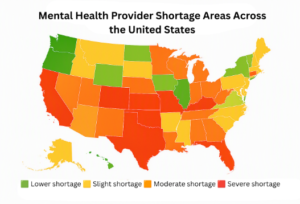
Demand for behavioral health services has grown quickly, but the number of available providers hasn’t kept up. In fact, the HRSA National Center for Health Workforce Analysis reports that about 137 million Americans (roughly 40% of the population) live in designated Mental Health Professional Shortage Areas, underscoring how widespread the gap has become.
For many organizations, that gap is showing up in very real ways: longer waitlists, open appointments that can’t be filled, and teams that are stretched thin.
At this point, it’s not just a hiring issue. It’s affecting how care gets delivered every single day.
What is Actually Driving the Gap
More people need care than the system can support
A significant number of people who need mental health services still aren’t receiving them. The demand is there—but there simply aren’t enough providers available to meet it.
The shortage is widespread – not just in rural areas
This isn’t just a rural issue anymore. Across the country, including large states like California, shortages are being felt in both smaller communities and major health systems.
It’s not just about hiring – it’s about sustainability
Even when roles are filled, challenges like burnout, administrative workload, and reimbursement limitations make it harder for providers to take on additional patients.
On top of that, short-term staffing fixes often come with higher costs and don’t always provide the consistency teams need.
Why This Is Becoming an Operations Problem
Staffing shortages have traditionally been managed as an HR issue, but their impact is now being felt across day-to-day operations:
- Appointment slots that stay open because there’s no provider available
- Patients waiting longer to be seen or to follow up
- Gaps in coverage when someone is on leave or a position turns over
- Teams relying on expensive, last-minute staffing solutions
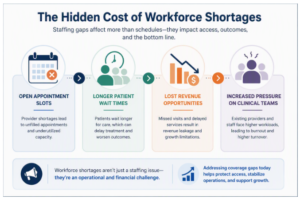
Over time, these issues don’t just affect access—they impact how smoothly your organization runs and how sustainable your services are.
What We’re Seeing Work
Organizations that are navigating this well aren’t just trying to hire faster, they’re approaching coverage more strategically.
Some of the approaches making a real difference:
- Creating flexible coverage plans instead of relying only on full-time hires
- Using telepsychiatry to reach patients in different locations and fill scheduling gaps
- Expanding the role of nurse practitioners and care teams to support psychiatrists
- Planning ahead for coverage gaps instead of scrambling when they happen
These shifts are helping organizations stay consistent, even when staffing is tight.
Where PMPI Fits In
This is where many organizations are starting to rethink their approach.
At PMPI, the focus is on helping teams stay fully covered without putting more pressure on their existing staff or waiting months to hire.
That can include:
- Providing steady psychiatric coverage to keep schedules filled and consistent
- Supporting new programs or growth without long recruitment timelines
- Helping maintain reliable access for patients, even during transitions or high-demand periods
The goal isn’t just to fill an open role, it’s to make sure your team can continue delivering care without disruption.
What This Means for Your Organization
Workforce shortages aren’t going away anytime soon. But how organizations respond to them is starting to matter more than ever.
Those who take a more proactive approach to coverage are finding it easier to stay ahead, by keeping services running, supporting their teams, and continuing to meet patient demand.
If you’re seeing any of these challenges in your organization, it may be worth taking a closer look at where gaps are happening and what options you have to address them.
If you would like to discuss options for strengthening coverage in behavioral health patient care, we invite you to connect with PMPI.